3. Prepare the baseline and network versions
What you will build
Reproduce the current network and prepare comparable versions for flexible sourcing and new facilities.
Before starting
Use the segmented demand and checked costs from the previous chapters. Identify current facilities and actual origin–destination relationships for the control scenario.
The network version defines possible connections. The execution profile selects scope, horizon, engine, and constraints. Changing one does not replace configuring the other.
| Network version | Connections and facilities | Purpose |
|---|---|---|
| Current network | Current origins and destinations, with limited flexibility | Reconcilable as-is baseline |
| Flexible current network | Same facilities, more allowed origins/destinations | Gains from reallocating flows |
| Network with candidates | Current and new facilities, with complete inbound and outbound lanes | Brownfield/greenfield |
Build and check the three versions
- Create the current network with its own identifier. List the plants, suppliers, HUBs, DCs, and regional demand points used in the reference period. For each lane, check its origin, destination, eligible materials, and fleet. Compare these connections with the flows actually operated.
- Limit baseline alternatives to the relationships needed to represent the current operation. A registered lane permits an alternative; it does not force the optimizer to reproduce a historical volume. Where fidelity requires additional constraints, record them in the profile and reconcile the baseline result before using it as the reference.
- Create the flexible current network with a different identifier and the same facilities. Reproduce valid connections and add the service alternatives you want to evaluate. Preserve the DC-only rules established in chapter 1, including their CIF/FOB demand shares.
- Compare both versions by origin and destination. Every added lane needs an explicit reason, an eligible fleet, and a cost source. Check that changes in material, distance, or unit were not introduced unintentionally along with the additional flexibility.
- Prepare the network with candidates from the flexible version. After barycenter analysis, add only the selected candidates and their complete connections, as explained in chapter 5. Keep the first two versions available for comparison.
When finished, select one regional demand point from each segment and trace its eligible origins in each version. A DC-only regional must continue to receive exclusively from DCs; a flexible regional may gain authorized origins. This separates the value of a more flexible existing network from the value of opening a new facility.
Inspect flexibility in Supply Network Explorer
- Open Supply Network Explorer. In Supply Network Version, check
MALHA-BASELINE,MALHA-FLEXIVEL, andMALHA-BROWNFIELD. The scenario also containsMALHA-ATUALandMALHA-EXPANSAO; select by identifier to preserve this training's comparison.
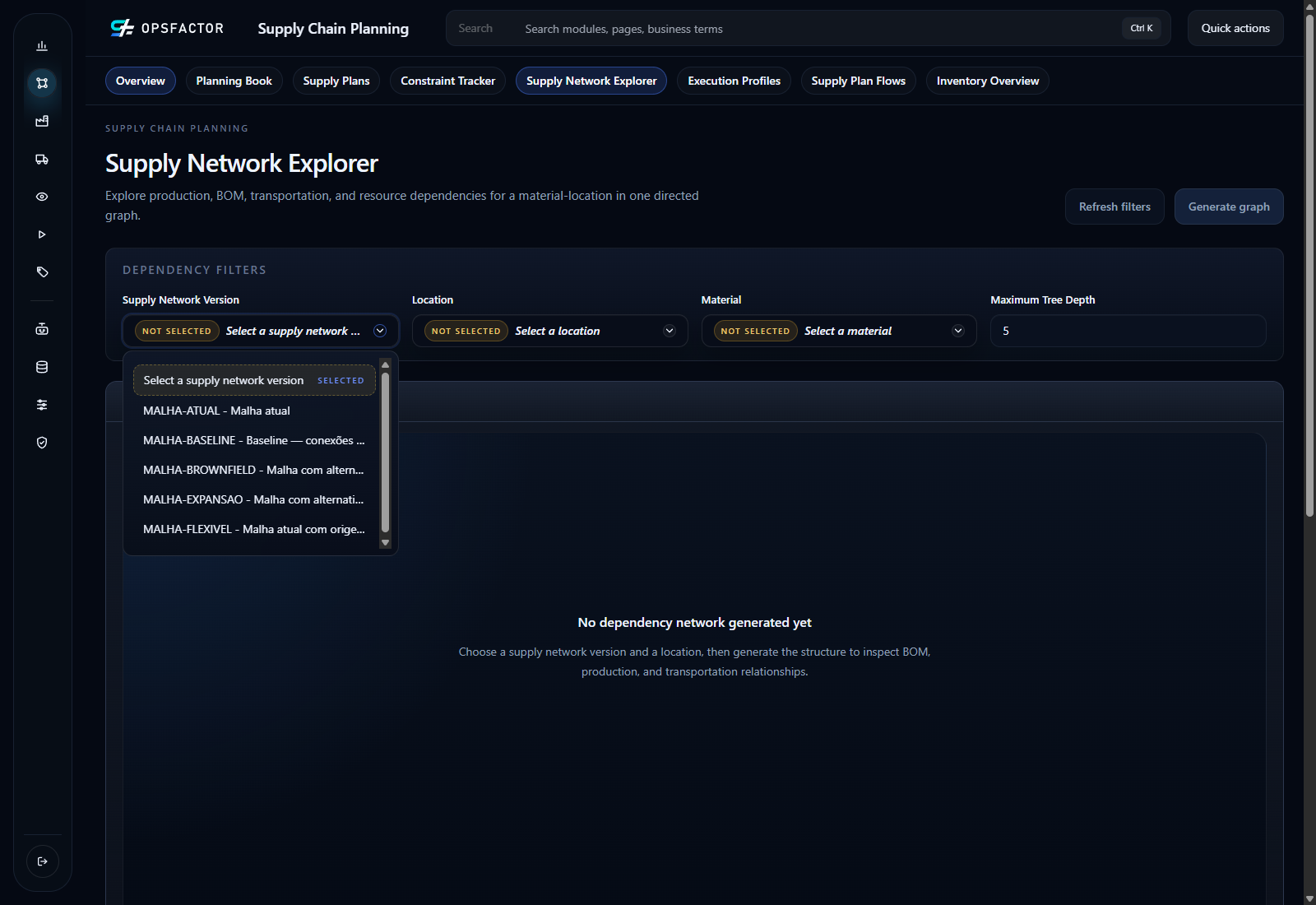
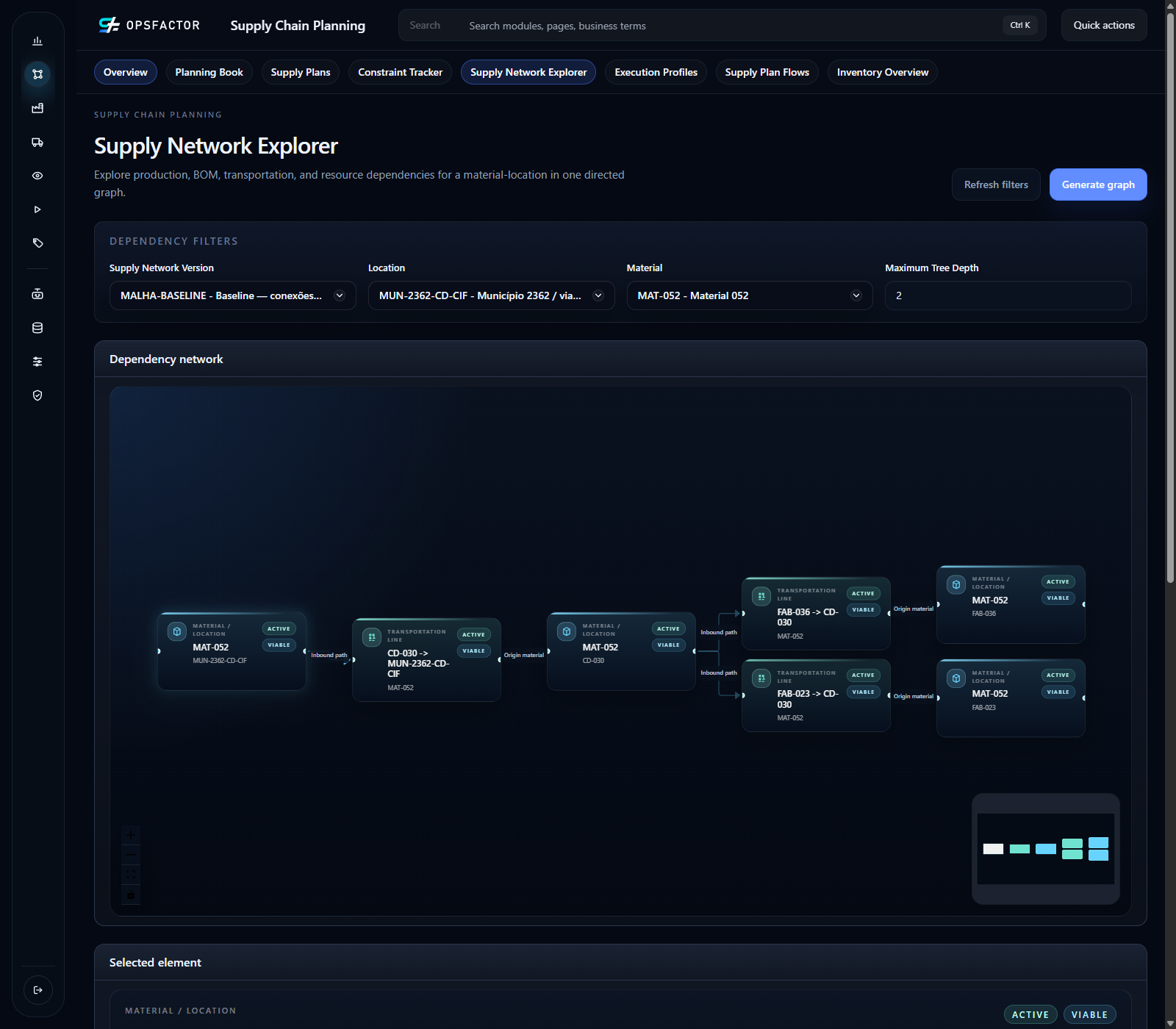
- Select MALHA-BASELINE, Location = MUN-2362-CD-CIF, and
Material = MAT-052. Set Maximum Tree Depth = 2 and click
Generate graph. This scope shows service through
CD-030, with eligible supply from plantsFAB-023andFAB-036.
- Change only the version to MALHA-FLEXIVEL and generate the graph again.
The customer now permits
CD-030,CD-060, andCD-062; plant origins includeFAB-010,FAB-023,FAB-036,FAB-049, andFAB-067. The customer remains DC-only: additional alternatives did not authorize direct plant deliveries.
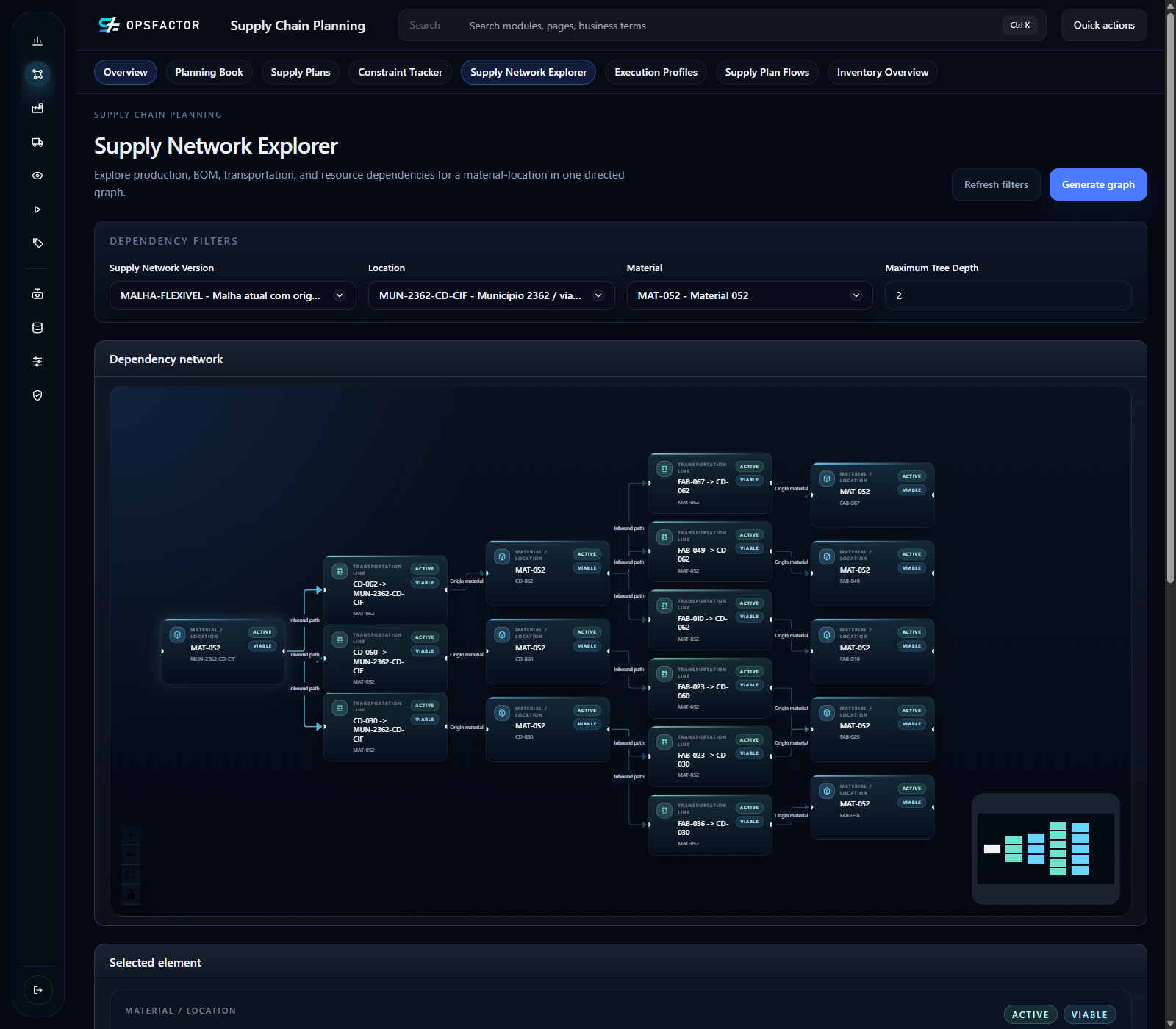
The Explorer displays dependencies from the selected material/location. Graph arrows do not represent physical freight direction; read origin and destination in each Transportation Line name. An eligible alternative does not prove transported volume; executed flows are checked after optimization.
Check before continuing
Versions have distinct identifiers. The baseline reproduces current structure; the flexible version adds only declared connections while keeping demand and economic assumptions comparable.
Previous: 2. Configure fleets and freight costs.